

What Are the Top Toys 4-Year-Olds Love Most?
Introduction The world of infant toys has expanded significantly, evolving i...

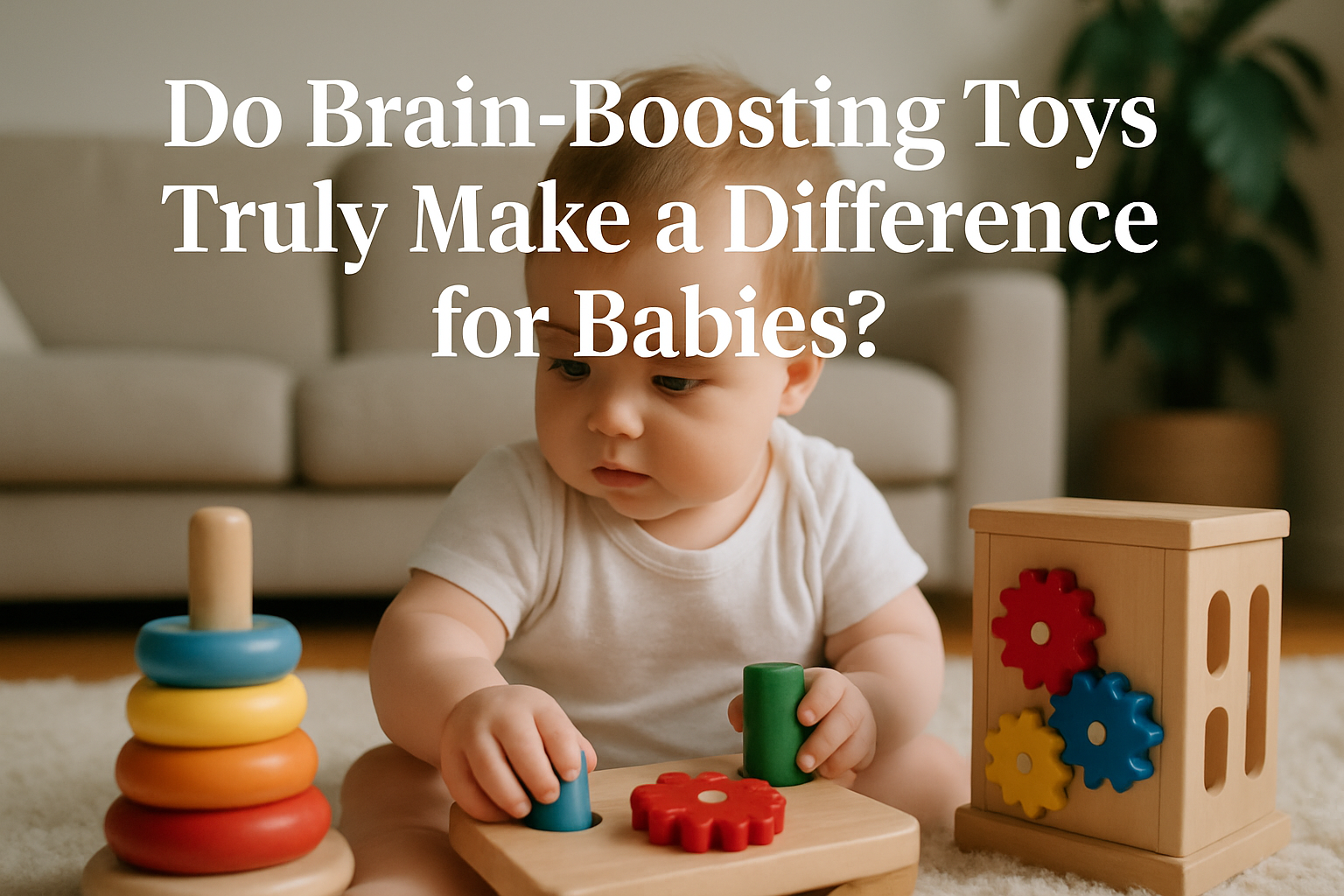

The world of infant toys has expanded significantly, evolving into a category that many parents now refer to as 'brain-boosting toys.' These toys are designed not just for entertainment but for enhancing cognitive development and supporting babies' growth as they explore their surroundings. With vibrant colors, varying textures, and interactive elements, these toys aim to stimulate the senses and facilitate crucial learning experiences during a baby's formative years. However, parents may find themselves questioning the actual effectiveness of these toys in contributing to cognitive development. Do they truly make a meaningful difference in a baby's brain development?
The effectiveness of brain-boosting toys in cognitive development raises intriguing questions regarding their role in fostering critical thinking, problem-solving skills, and sensory experiences. Many toys are marketed with claims of enhancing intelligence or speeding up developmental milestones. However, it's essential to delve deeper into their actual impact on infants. Are these toys genuinely beneficial, or are they merely another trend in the endless aisle of children's products? Exploring these questions will shed light on the value of brain-boosting toys and their true contribution to early cognitive development.
Brain-boosting toys encompass a wide range of products aimed at promoting developmental benefits in infants. These toys often include features designed to engage a child's senses and encourage interaction. Their intended use is not only to entertain but also to provide stimulation that supports cognitive growth, motor skills, and language acquisition. Such toys engage an infant's curiosity, inviting them to explore their world while developing essential life skills. By incorporating elements that appeal to sight, sound, and touch, brain-boosting toys help lay a foundational framework for future learning experiences.
Different age ranges are targeted by various types of brain-boosting toys. For instance, toys aimed at the youngest infants (0-6 months) are typically designed to promote sensory awareness through high-contrast colors and gentle textures. As infants grow and reach developmental milestones, the toys evolve accordingly. For the 6-18 month age group, toys that promote cause-and-effect understanding or encourage exploration through sound and movement play a crucial role. Furthermore, as children approach their first birthday, educational toys like puzzles that foster memory and reasoning skills become important. Each category of toy aligns with key developmental stages, ensuring that infants are both challenged and engaged as they grow.
The role of toys in cognitive development cannot be overstated. Infants engage with their surroundings primarily through play, making toys essential tools for exploration and learning. Recent studies emphasize that the environment in which play occurs significantly influences infants' play behaviors. An enriching environment filled with various stimuli allows infants to experiment, observe, and learn through their interactions with different toys. As infants manipulate and engage with their toys, they develop problem-solving skills and creativity, laying down a strong foundation for future learning.
Sensory toys, in particular, enhance learning by engaging infants through multiple senses. The use of textures, colors, and sounds in toys stimulates infants’ curiosity, enabling them to discover how objects behave in various ways. For instance, toys that crinkle, rattle, or have different surfaces encourage tactile experiences that are vital for cognitive development. This sensory exploration is crucial for infants as it allows them to form connections in their brains that facilitate learning and understanding. It is through this multisensory engagement that infants begin to make associations between their actions and the reactions they observe.
In addition, interactive toys that respond to infants' actions further enhance the learning experience. Such toys encourage infants to experiment with cause and effect, which is foundational for cognitive development. As they push buttons, pull, or shake, they begin to understand that their actions can lead to specific outcomes, fostering a sense of agency. Overall, incorporating sensory toys into an infant's playtime is an effective way to stimulate cognitive growth and encourage diverse learning experiences.
When considering appropriate toys for infants, it is important to tailor choices based on their developmental stage. For infants aged 0-6 months, high-contrast toys and soft books are particularly beneficial. These items capture visual attention and contribute to sensory awareness. The stark differences in color help to stimulate visual development, as infants' eyesight is still developing during this stage. Gentle textures from soft toys also provide tactile exploration opportunities, which are essential for early cognitive engagement.
Moving into the 6-18 month age range, toys like maracas play a significant role in sound exploration. During this period, infants become increasingly aware of auditory stimuli and enjoy producing sounds themselves. The act of shaking maracas introduces them to rhythm and noise-making, elements that are vital for their auditory sensibilities and early communication skills. Such toys not only foster sensory exploration but also encourage motor skill development as infants learn to grasp and manipulate objects, laying the groundwork for more advanced physical skills in the future.
The benefits of puzzles come into play, enhancing memory and reasoning skills. Puzzles require infants to use their problem-solving abilities, helping them recognize shapes and colors while developing spatial awareness. This activity challenges their cognitive capacities and fosters critical thinking as they learn to fit pieces together. Lastly, for children aged 18-36 months, pretend play toys become crucial as they begin to engage in imaginative play. These toys not only aid in language development through storytelling but also enhance social skills as children interact with peers during play. Each stage of development emphasizes the importance of appropriately selected toys, supporting brain development and cognitive growth at every turn.
Toys serve as fundamental tools in the development of critical thinking and problem-solving skills, especially during early childhood. Puzzles and building blocks are prime examples of how play can aid cognitive growth. When a child engages with puzzles, they confront challenges that require them to think logically and recognize patterns. Each piece of a puzzle must fit into a specific space, demanding spatial reasoning and attention to detail. This process not only enhances their problem-solving abilities but also boosts their perseverance as they work to find solutions. As children manipulate building blocks, they experiment with balance and symmetry, reinforcing their understanding of physics in an intuitive manner. Such hands-on activities encourage children to explore ideas, make predictions, and refine their thinking through trial and error.
Moreover, exploratory toys that invite investigation and creativity significantly contribute to spatial awareness. As children explore their environment through play, they begin to understand how objects interact in space. Whether they're navigating a maze or constructing a fort, these activities build their ability to visualize spatial relationships, a skill vital in mathematics, science, and everyday life. By analyzing how different pieces come together, children learn about geometry and dimensions in a playful context. The freedom to explore and discover answers independently promotes a growth mindset, instilling confidence in their evaluative skills. The act of figuring out how to achieve a desired outcome fosters independence and nurtures a sense of responsibility for their learning journey.
Furthermore, interactive toys play a key role in supporting social skills and emotional intelligence. Toys that encourage group participation or cooperative play invite children to communicate and collaborate with peers. Through shared experiences, they learn to express their thoughts and feelings while also negotiating and resolving conflicts. This social interaction is essential for developing empathy as children begin to understand different perspectives. For instance, role-playing scenarios with interactive toys enable them to practice empathy and emotional regulation, crucial components of emotional intelligence. As they navigate various social situations through play, they become better equipped to handle real-life interactions with sensitivity and awareness. Thus, engaging with these types of toys not only enhances intellectual development but also promotes vital interpersonal skills that are important for their overall growth.
When it comes to fostering cognitive development in children, the toys we choose play an essential role. Selecting the right toys can ignite curiosity, inspire creativity, and improve problem-solving skills. As a parent, understanding how to pick toys that are not only fun but also educational is vital. This means looking for age-appropriate toys that align with your child's developmental milestones. Start by considering toys that challenge their cognitive abilities—like puzzles, building blocks, or science kits. These toys encourage children to think critically and experiment with different concepts, thereby enhancing their learning experiences.
Moreover, it's important to maintain a balanced toy collection that caters to various aspects of a child's development. While cognitive growth is crucial, toys that promote physical skills, emotional intelligence, and social interaction should not be overlooked. For instance, arts and crafts supplies can foster creativity and emotional expression, while board games and cooperative activities can develop social skills and teamwork. By integrating a variety of toys into your child's playtime, you can create a holistic environment that supports comprehensive growth—mental, physical, emotional, and social.
Finally, regularly evaluating and refreshing your child's toy collection is beneficial. As children grow, their interests and developmental needs evolve. What may have been an engaging toy at one stage could become less stimulating as they develop new skills. Be proactive in rotating toys to maintain their interest and challenge them intellectually. This active engagement can lead to deeper learning experiences and sustained cognitive advancement. Your thoughtful approach to selecting and curating toys will not only enhance your child's cognitive abilities but will also instill a lifelong love for learning.
Interactive toys play a significant role in the early stages of childhood development, serving as essential tools that enhance learning through engagement and exploration. These toys often require active participation from children, thereby stimulating their cognitive functions. When children interact with toys that respond to their actions, they develop critical thinking skills and problem-solving abilities. For instance, puzzles that necessitate matching shapes or colors demand both memory and recognition, encouraging kids to think ahead. As they navigate the challenges posed by these toys, they also engage in trial-and-error learning, a fundamental cognitive process that develops resilience and adaptability.
Moreover, studies reveal that interactive toys can significantly influence how children process information. The stimulation derived from these toys enhances brain development by creating connections between neurons. Some cognitive functions that benefit from this interactive play include attention span, language development, and sensory perception. Children learn to categorize objects, comprehend cause-and-effect relationships, and verbalize their thoughts as they engage in play. Such cognitive stimulation is not merely a byproduct of play; in fact, it lays down the foundation for academic skills that emerge later on as children transition into structured learning environments.
Equally important is how these interactive toys foster the enhancement of motor skills. Developmental toys specifically designed for young children can greatly enhance both gross and fine motor skills. Gross motor skills involve the use of large muscle groups for activities like running, jumping, and throwing. Toys that encourage movement, such as those that require pushing, pulling, or climbing, are essential for strengthening these muscle groups. For example, activity centers that allow children to climb or balance serve to improve overall coordination and physical confidence.
On the other hand, fine motor skills involve smaller muscle movements, primarily in the hands and fingers. Toys that involve stacking, threading, or manipulating small objects require precise movements, thereby improving dexterity. As children grasp, pinch, and release these objects, they develop the motor skills necessary for tasks like writing or buttoning clothes in the future. Such play-based learning also enhances hand-eye coordination, as children learn to control their movements in relation to visual stimuli, which is integral for tasks they will encounter as they grow.
Furthermore, interactive toys also significantly contribute to the promotion of emotional growth in young children. Emotional development is critical during early childhood, and these toys often provide a platform for children to express their feelings and emotions. Engaging with playful characters or narrative-based toys allows children to explore different emotions in a safe environment. They can project their feelings onto these toys, helping them understand complex emotions such as sadness, joy, or frustration. This form of imaginative play acts as a rehearsal space for dealing with real-life emotions, empowering children with tools to manage their feelings effectively.
Additionally, interactive toys promote social skills by encouraging cooperative play among peers. When children play with these toys, they learn the value of teamwork, sharing, and communication. Collaborative games that require multiple participants help children develop important social skills such as negotiation and empathy. As they interact, they are given opportunities to engage in dialogue, resolve conflicts, and collaborate on shared goals. This social interaction lays the groundwork for building friendships and understanding social cues, which are vital components of emotional intelligence.
In summary, interactive toys are powerful tools in early childhood learning, impacting cognitive development, enhancing motor skills, fostering emotional growth, and supporting social skill development. By creating engaging and stimulating environments for children, these toys offer essential learning experiences that form the basis for future educational success and personal development. Ultimately, the role of interactive toys extends beyond mere entertainment; they are instrumental in shaping the holistic growth of children in their formative years.
Cultural perspectives on toy usage reveal significant differences in how mothers engage with their children during play. In American households, mothers often use elicitation strategies that encourage dialogue. This interactionally rich approach promotes conversational exchanges between mothers and children, resulting in enhanced language development and social skills. By asking open-ended questions and inviting elaboration, American mothers create a nurturing environment where children feel empowered to express their thoughts and ideas, thus cultivating their creativity.
Conversely, Thai mothers tend to focus more on vocabulary acquisition rather than dialogue. Their strategies during play are aimed at reinforcing language skills through repetitive naming and contextual vocabulary usage. This method emphasizes vocabulary comprehension over conversational skill, highlighting a cultural prioritization of lexical knowledge. The toy play environment in Thailand often invokes structured activities where children are encouraged to recognize and label objects, fostering early literacy skills differently than the dialogic approach predominant in American culture.
The contrasting methods employed by mothers in different cultures serve to illustrate how societal values shape early childhood education practices. For instance, while the American model encourages expressive communication, the Thai approach underscores the importance of foundational language skills. Understanding these variations is essential for educators and parents, as they can significantly affect children's developmental trajectories. By examining these cultural contexts, caregivers can better appreciate their own practices and consider diverse experiences that may enrich their children’s play.
The relationship between gender and cultural contexts in play is another vital area of study. Research has consistently highlighted that play preferences can differ markedly between boys and girls, influenced by cultural norms. In many cultures, boys tend to gravitate toward active, competitive play, while girls often engage in cooperative and nurturing role-playing scenarios. These patterns can be traced back to societal expectations that dictate appropriate behaviors and interests for each gender, further perpetuating traditional roles as children grow.
This gendered play behavior has significant implications, particularly when considering how toys are categorized and marketed. In cultures where traditional gender roles are reinforced, toys are often divided into 'boys' and 'girls' sections, encouraging children to conform to societal stereotypes. For example, boys may be directed towards action-oriented toys promoting aggression and competitiveness, while girls might be steered towards domestic and relational play scenarios. Such segmentation can limit children's exposure to a wide range of experiences, ultimately influencing their social skills and identity formation.
However, it's essential to recognize that cultural change is gradually shifting these dynamics. In contemporary contexts, there's a growing movement towards gender-neutral play, encouraging all children to explore a diverse array of toys and activities without the constraints of traditional gender roles. This shift not only promotes equality but also allows children to develop a broader set of skills and interests. Understanding the intersections of gender and culture in play is fundamental for nurturing an inclusive environment where every child can thrive.
Play is an essential activity for babies, serving as a critical avenue for exploration and comprehension of their surroundings. During playtime, infants engage with various stimuli that encourage their cognitive growth. This active engagement helps them develop fine motor skills and enhances sensory perception, allowing them to interact meaningfully with the world. As babies manipulate toys, they discover different textures, shapes, and sounds, leading to a richer understanding of their environment. The variety of experiences fosters curiosity and motivates them to experiment, promoting further development.
Moreover, engaging in play sparks emotional responses and fosters social connections. When children interact with caregivers during play, they learn about emotions, communication, and social norms. These early interactions are foundational in shaping their ability to form relationships and navigate social environments later in life. Additionally, as babies respond to feedback from their actions—like laughing when a toy squeaks—they begin to understand the dynamics of interaction. This crucial aspect of play contributes significantly to their emotional intelligence and social awareness.
As infants explore, they also enhance problem-solving skills. For instance, figuring out how to fit shapes into corresponding holes or learning to stack blocks can promote critical thinking. This hands-on learning experience nurtures adaptability and resilience, as babies learn to overcome challenges and develop persistence. The combination of physical, emotional, and cognitive experiences during playtime with stimulating toys is aligned with research indicating that play is a fundamental driver of brain development in early childhood.
During play, one of the most significant cognitive developments is the understanding of cause and effect. As babies engage in actions like dropping or throwing objects, they start grasping the relationship between their behaviors and the outcomes of those behaviors. For example, when they drop a toy and watch it fall, they begin to link the action with the reaction. This foundational understanding lays the groundwork for more complex cognitive tasks later in life, such as reasoning and logical thinking.
Additionally, playtime encourages creativity and imagination. As infants manipulate toys, they often create narratives or scenarios that enhance imaginative play. This creative aspect is vital, as it not only supports cognitive development but also nurtures emotional expression. Imaginative play allows children to experiment with different roles and perspectives, helping them develop empathy and social skills. Through these playful scenarios, infants learn to navigate emotions and understand the feelings of others, which is an essential component of emotional intelligence.
Playtime also serves as a laboratory for experimentation. Babies frequently test boundaries and push limits during their play. They may explore how high they can stack blocks before they tumble down, or how far they can throw a ball. These experimental behaviors are vital for developing critical thinking and inquiry skills. By encouraging curiosity and exploration, play stimulates intellectual development and fosters a mindset geared toward learning and discovery. The cognitive skills acquired during play are invaluable assets that will benefit children as they progress through various stages of development.
The early stages of a child's development are packed with opportunities for learning, and brain-boosting toys play a vital role in this journey. These toys are specifically designed to stimulate a newborn's mind and foster essential cognitive skills. Engaging with these toys supports the development of problem-solving skills, enhances memory retention, and refines information processing abilities. As infants explore various textures, sounds, and shapes, they interact with their environment in meaningful ways, laying the foundation for critical thinking and cognitive growth.
Cognitive skill enhancement through play can be seen when newborns manipulate toys. As they grasp, shake, and explore different objects, they begin to understand cause and effect. This exploration is critical for memory retention, as repeated interactions help solidify neural connections, making it easier for infants to remember what they have experienced. Moreover, engaging in these activities promotes active information processing. Infants learn to recognize patterns and make associations, which are essential components of cognitive development. The integration of these skills creates a solid base upon which future learning will build.
In addition to cognitive skill enhancement, brain-boosting toys significantly contribute to motor skill development. These toys offer various opportunities for infants to practice both fine and gross motor skills. Fine motor skills involve small movements, typically those of the hands and fingers, and are essential for tasks such as gripping objects or manipulating toys. Toys that encourage reaching, grasping, and pushing help infants strengthen their hand-eye coordination and dexterity. Simultaneously, gross motor skills, which encompass larger movements like crawling or sitting up, are fostered through toys that engage their entire body, motivating them to reach and move.
The interplay between cognitive skill enhancement and motor skill development creates a holistic approach to a newborn's growth. As babies use their toys to explore and learn, they not only sharpen their minds but also enhance their physical capabilities. This interconnectedness ensures that playtime is not just about fun but also significant for overall development. Investing time in selecting appropriate brain-boosting toys allows caregivers to support their infants' growth effectively, aiding in the crucial early years where the groundwork for learning is established.
The impact of educational toys on child development is profound and multifaceted. These toys are not mere play items; they serve as essential tools that facilitate various aspects of growth in children. When children engage with educational toys, they enhance their cognitive abilities, motor skills, psychosocial development, emotional maturity, and linguistic capabilities. This process begins in early childhood and can have lasting effects that carry into later stages of life.
Educational toys significantly boost cognitive skills as children learn to solve problems and think critically. Toys that require assembling parts, following instructions, or navigating challenges stimulate brain development and encourage logical reasoning. For instance, puzzles and construction sets compel children to strategize and develop a plan to complete a task, promoting analytical thinking. Over time, these skills lay the groundwork for effective problem-solving abilities that children carry into their academic pursuits, thereby influencing educational success.
Moreover, these toys facilitate the development of motor skills through hands-on activities. Manipulating small pieces, stacking blocks, or engaging with interactive games helps refine fine motor skills essential for everyday tasks. The repetitive motions involved in these activities strengthen hand-eye coordination and dexterity, which are critical as children transition into more complex physical tasks. Through play, children also develop gross motor skills by running, jumping, or balancing with larger toys, contributing to their physical health. As their motor skills advance, children gain greater control over their bodies, which helps in sports, writing, and even daily routines like dressing.
Psychosocial and emotional growth are equally impacted by the play dynamics associated with educational toys. As children interact with others through shared play, they cultivate important social skills such as cooperation, empathy, and communication. Playing with peers encourages teamwork and conflict resolution as they learn to negotiate and express their feelings. Additionally, many educational toys incorporate elements of personal challenge, which can enhance a child's self-esteem and emotional resilience. They learn to cope with failure, celebrate successes, and build a sense of perseverance. This holistic approach to development ensures that children emerge from their formative years well-equipped with the social tools necessary for future interactions in personal and educational contexts.
In contrast to electronic toys, traditional play with non-digital toys holds significant advantages for children's development. Parents recognize that traditional toys, such as building blocks, dolls, and art supplies, facilitate the enhancement of visual-motor skills. These toys encourage children to manipulate objects, fostering coordination and fine motor skills that are essential during early developmental stages. The tactile experience of handling physical toys provides sensory feedback, allowing children to learn through touch and sight, which is often missing from screen-based interactions.
Additionally, traditional play promotes imaginative thinking and creativity. When children engage in pretend play, they create scenarios, invent characters, and devise solutions to problems. Such activities stimulate cognitive growth and enhance problem-solving skills. Parents often witness firsthand how their children’s creativity flourishes when they have access to traditional toys that allow for open-ended play. This form of engagement not only helps children develop their imagination but also nurtures emotional intelligence as they navigate social interactions within play.
Furthermore, traditional toys often encourage cooperative play. When children play together, they practice sharing, taking turns, and communicating effectively. These social interactions are critical in developing interpersonal skills, which are foundational to future relationships. Parents find value in observing their children collaborating with peers, negotiating roles, and enjoying shared experiences that traditional toys facilitate. As such, many parents advocate for a balanced approach that incorporates traditional play as a fundamental component of childhood learning and development, ensuring that their children thrive both cognitively and socially.
When parents consider buying brain-boosting toys, a variety of factors influence their decision-making process. Primarily, educational value takes precedence as parents seek toys that can foster learning and cognitive development in their children. Toys that promote critical thinking, problem-solving skills, or creativity can justify their cost by providing long-term benefits to a child’s intellectual growth. Parents often look for developmental milestones that a toy can help their child achieve, such as enhanced motor skills or improved language abilities. If a toy can contribute significantly to a child's learning experience, parents are more likely to deem it worth the investment.
Safety is another critical factor in the purchasing decision. Parents are particularly cautious about potential hazards associated with toys, such as choking risks or toxic materials. A toy that bears safety certifications or meets established safety standards can significantly sway a parent's choice. As parents evaluate the safety of brain-boosting toys, they often prioritize those that not only protect their children but also inspire peace of mind. When a toy's design incorporates non-toxic materials and adheres to rigorous safety regulations, it becomes more appealing, signifying to parents that their investment is both sound and secure.
Finally, playability cannot be overlooked. Toys that engage children in imaginative play while offering varied levels of challenge tend to hold greater appeal. Parents want toys that can capture their children's attention for long periods, allowing them to explore and interact without losing interest. A brain-boosting toy that promotes cooperative play, as well as individual exploration, can provide versatile play scenarios. This adaptability can enhance the perceived value, making parents more willing to spend on it. In essence, the interplay of educational value, safety, and playability forms a nuanced framework within which parents conduct a cost-benefit analysis when purchasing brain-boosting toys.
Choosing the right toys is essential for fostering cognitive growth in children. The toys children interact with during their formative years significantly contribute to their developmental skills, including problem-solving, creativity, and emotional intelligence. Engaging toys stimulate curiosity and encourage exploration, which are fundamental for healthy brain development. When selecting toys, parents should prioritize options that challenge children to think critically and solve problems rather than simply entertain them.
Additionally, the importance of variety in toy selection cannot be overstated. Different types of toys cater to various aspects of cognitive growth. For instance, building sets enhance spatial awareness and fine motor skills, while imaginative playsets encourage creativity and social interactions. It's vital for caregivers to recognize that a balanced mixture of toys—ranging from educational to open-ended—can create a rich environment conducive to comprehensive cognitive development. By doing so, children are not only entertained but are also learning and developing vital skills that will serve them throughout their lives.
Moreover, the role of parents and educators in guiding toy selection should not be overlooked. Adults must engage with children as they play, asking open-ended questions and fostering discussions about their play experiences. This interaction enhances the learning potential of the toys and creates meaningful connections between adults and children. Selecting toys that promote interactive play can further support these relationships and ensure that children develop both cognitively and socially. Ultimately, thoughtful toy selection can lay the groundwork for lifelong learning and adaptability in an ever-evolving world.



Introduction The world of infant toys has expanded significantly, evolving i...

Introduction The world of infant toys has expanded significantly, evolving i...